
How to Choose an Electrician: Licence Check, CCEW and Red Flags
How to choose an electrician in Sydney: check the licence on Service NSW, ask for a CCEW, and walk away from cash-only or too-cheap quotes. A licensed NSW checklist.
If you are googling how to choose an electrician, you are already doing the right thing by slowing down and checking. In NSW, electrical work is tightly regulated for a reason. The wrong decision can put your safety at risk, leave you with non-compliant work, and create headaches with insurance later.
In New South Wales, you need an electrical licence or certificate to do electrical wiring work, regardless of the job cost, and doing wiring work without one is a breach with serious penalties. The Electrical Regulatory Authorities Council (ERAC) coordinates electrical safety policy nationally, but licence checks are always done through your state register.
From a small repair to a full switchboard upgrade, the same checks apply in NSW when choosing an electrician in Sydney.
Below is the practical, no fluff guide I would give my own family on choosing an electrician in Sydney.
How to choose an electrician in Sydney (quick answer)
- Verify the licence via Service NSW or Verify NSW before work starts
- Confirm you will receive a CCEW for installation work
- Get a written scope of works and invoice from a licensed business
- Match the electrician type to the job (domestic, Level 2 ASP, or solar/battery)
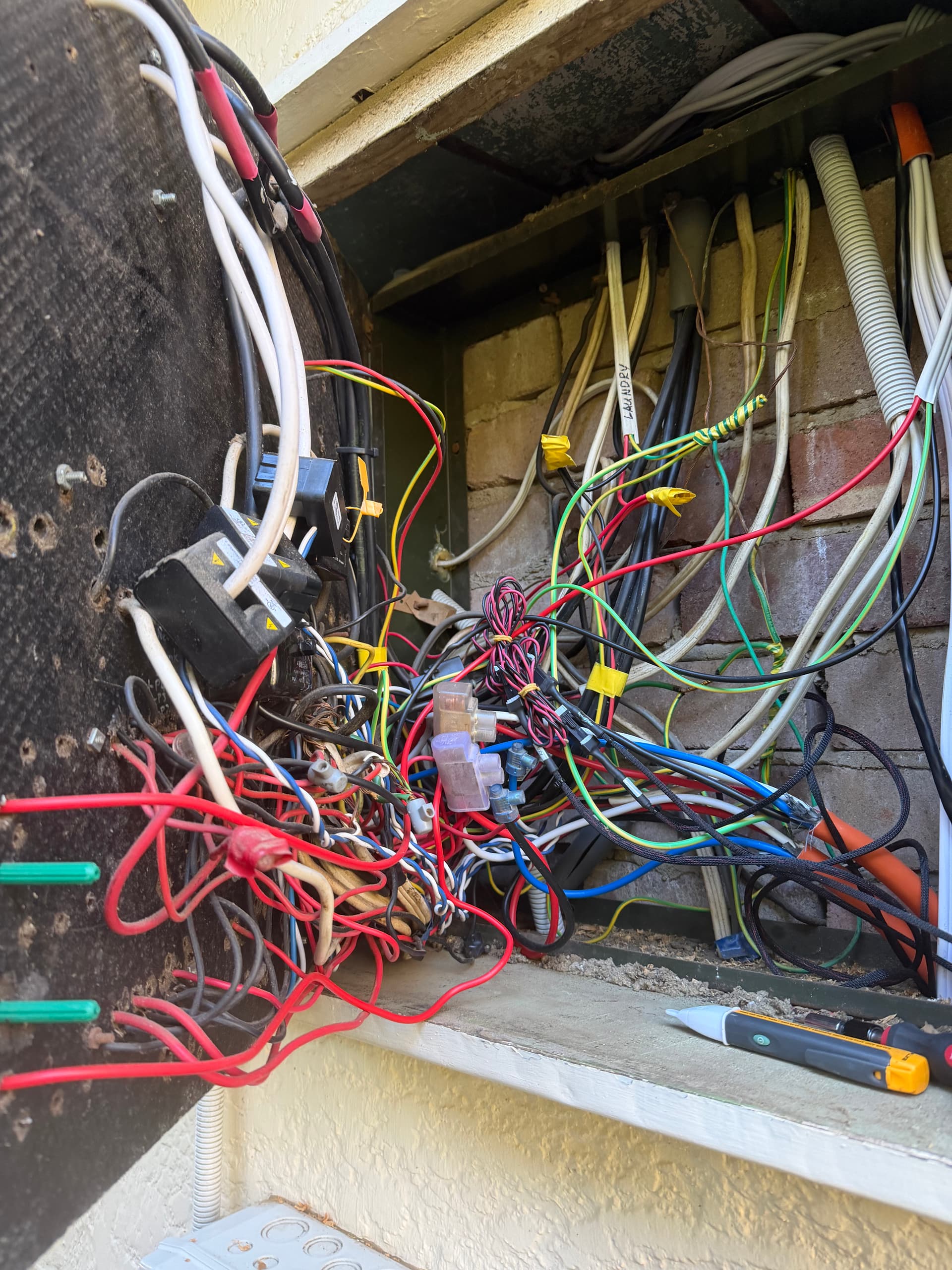
Why choosing an electrician in Sydney matters
Electrical faults are not like a squeaky door. They can cause fire, shock, or equipment damage. Insurers and regulators also expect compliant work and proper documentation - especially for switchboard upgrades, solar and battery systems, and anything touching the Level 2 network connection.
Step one: confirm they are licensed for the work
Before anyone touches your switchboard, ceiling, or wiring, confirm their licence.
Use Service NSW to check a builder or tradesperson licence. You can also search the Verify NSW contractor and tradesperson register by name, licence number, ABN/ACN, or location.
If they will not give you their licence details, walk away. It is not worth the risk.
What you should DO when hiring an electrician
1) Verify their licence (and the business) before they start
Use the official Service NSW licence check and make sure what you see matches the person and business turning up.
What I look for:
- Current licence status
- Correct licence type for the scope (especially for larger jobs)
- A real business identity (ABN details match invoices)
2) Ask for a Certificate of Compliance for Electrical Work (CCEW)
For most electrical installation work in NSW, a CCEW is the paperwork that proves the job was completed and tested to the required rules. It is also something insurers may ask for if there is a fault, fire, or claim. NSW Government guidance on electrical compliance requirements sets out the compliance certificate process, including the move to eCert via the Building Commission NSW eCert portal.
How to handle it in real life:
- Ask upfront: "Will I receive a CCEW for this job?"
- Make it part of the agreement, not an awkward add-on at the end
- Keep it with your house docs (like pest reports, warranties, manuals)
3) Make sure they can legally contract for the work (especially renovations)
There is a difference between a qualified electrician on the tools and the entity that contracts, quotes, and takes responsibility for the job.
For larger residential building work, NSW sets contract requirements and what must be included. Jobs between $5,000 and $20,000 must be covered by a small jobs contract, and the contract must include specific details.
Practical takeaway:
- For renovations, rewires, switchboard upgrades, solar, batteries, and anything involving multiple visits, ask who the contract is with and get it in writing.
4) Confirm insurance
At minimum, you want public liability cover. For higher-risk work (switchboards, major upgrades, solar, batteries), it is reasonable to ask what cover they carry and whether they are insured for that scope.
If they dodge the question, that's your answer.
5) Get a clear scope of works (so there are no surprises)
This is where good trades win and bad trades get found out.
ACCC guidance on checking a business is genuine recommends verifying licences and registrations, writing a clear job brief, and understanding how changes are handled.
What I recommend you lock in:
- What is included and excluded
- Assumptions (access, ceiling space, switchboard condition, asbestos risks)
- How variations are approved (no "we just did it" add-ons)
- Brands and specs where it matters (fit-off brands, cable sizing where relevant, RCD type, switchboard hardware)
6) Ask how they will test the work
A licensed electrician should talk comfortably about testing, not just "she'll be right".
You do not need a technical lecture. You just want confidence they test and document properly, and that compliance paperwork is provided where required.
7) Future-proof while you are already paying for access
If you are opening walls or upgrading a board, think ahead:
- EV charger readiness
- Solar and battery readiness
- Powerpoints and switches
- Capacity for future air con or induction cooking
There are also newer safety requirements electricians need to follow. For example, NSW guidance on RCD compliance notes that the Wiring Rules prohibit Type AC RCDs in new installations, and Type A or Type B must be used instead. If you are upgrading protection, ask about safety switch and RCD work.
What you should NOT do when hiring an electrician
1) Do not choose based on price alone
A drastically cheap quote often means one of three things:
- Shortcuts on testing or compliance paperwork
- Inferior materials
- The quote is not like-for-like and will blow out later
2) Do not accept cash only with no paperwork
No invoice usually means no warranty trail, and if there is no compliance certificate where one should exist, you are taking on risk you do not need.
Also, your consumer rights exist regardless of a "warranty", but you still want documentation to enforce them.
3) Do not assume solar and batteries are "just electrical"
Solar and batteries have extra standards, extra compliance, and extra risk if done wrong.
For STC eligibility under the Small-scale Renewable Energy Scheme, the Clean Energy Regulator explains that installers and designers must be accredited under the scheme operator, and that accreditation moved to Solar Accreditation Australia (SAA).
If you are doing solar or batteries:
- Confirm the designer/installer is SAA accredited
- Confirm the install is eligible for STCs (if you are claiming them) - see Australian Government guidance on small-scale renewable energy systems
Know what type of electrician you actually need
This is a big one. People search how to choose the right electrician and assume every sparky can do every job. Not true.
Start here:
- Domestic electrician: general home repairs, new circuits, lights, fans, power points, and fault finding
- Commercial or industrial: fitouts, three-phase, machinery, compliance systems
- ASP Level 2 (NSW): service mains work, point of attachment, some meter-related and network connection work. In NSW there is an official list of Accredited Service Providers
- Solar and battery electrician: electrical licence plus SAA accreditation for SRES work and STC eligibility
If someone says "yeah I can do that" to everything, treat that as a yellow flag and ask what their actual day-to-day work is.
The questions I would ask before I book anyone
Use these verbatim:
- "What is your licence number and business name so I can verify it?"
- "Will I receive a CCEW for this work?"
- "Who is the entity I am paying, and will I get an invoice?"
- "What exactly is included and excluded in your quote, and how do you handle variations?"
- "What testing will you do once the job is complete?"
- "Who will actually be on-site?"
- If solar/battery: "Are you SAA accredited, and will the install be eligible for STCs?"
- If mains/network work: "Are you an ASP Level 2, and are you listed on the NSW ASP register?"
Free checklist
Before you hire your next electrician
Work through these steps before you book - save, screenshot, or print for your records.
- Step 1: Confirm what electrician you need - domestic, commercial, industrial; ASP Level 2 (network/service mains); solar and battery (SAA accredited for STCs)
- Step 2: Verify the licence - check Service NSW or Verify NSW using name, licence number, ABN/ACN, or suburb
- Step 4: Confirm quote scope - included vs excluded; how variations are approved; brands and specs for fittings (where relevant). See ACCC guidance on checking a business
- Step 5: Confirm testing and documentation - ask what testing they will perform; ask for an invoice and job documentation
- Step 6: Specialist checks - solar/battery: SAA accreditation for STC eligibility; RCD upgrades: confirm compliance with current RCD requirements (Type AC prohibited in new installs) and consider an electrical safety inspection
Following this checklist is the simplest way to choose the right electrician for your home or business in Sydney.
Useful resources
- Checking a business is genuine (ACCC) - Verify licences, registrations, and business identity
- Electrical Regulatory Authorities Council (ERAC) - National coordination of electrical safety regulators
- NSW electrical licensing requirements - Who needs a licence and what work it covers
- Check a builder or tradesperson licence (Service NSW)
- Verify NSW - contractor and tradesperson register
- Electrical compliance requirements and CCEW (NSW Government)
- BCNSW eCert portal - Online CCEW submission from July 2026
- Contracts for residential building work (NSW Government)
- RCD compliance and Type AC prohibition (NSW Government)
- Clean Energy Regulator - SRES accreditation scheme operator
- Solar Accreditation Australia (SAA)
- Small-scale renewable energy systems (Clean Energy Regulator)
- NSW Accredited Service Provider (ASP) Scheme