Book a licensed check for sale, rental, or pre-purchase. We inspect homes and small commercial sites across Greater Sydney and the Illawarra. You get a written report, a clear quote for any repairs, and a licensed electrician on site. We do not take interstate jobs.
Verify our NSW Contractors Licence 493243C on the official NSW Trades register.
[ OVERVIEW ]
What you get when you book an inspection
This page is for booking an electrical safety inspection in Sydney. If you want the long explanation of what gets tested, costs, and CCEW versus an inspection report, read our electrical safety check guide first. Then come back here to book.
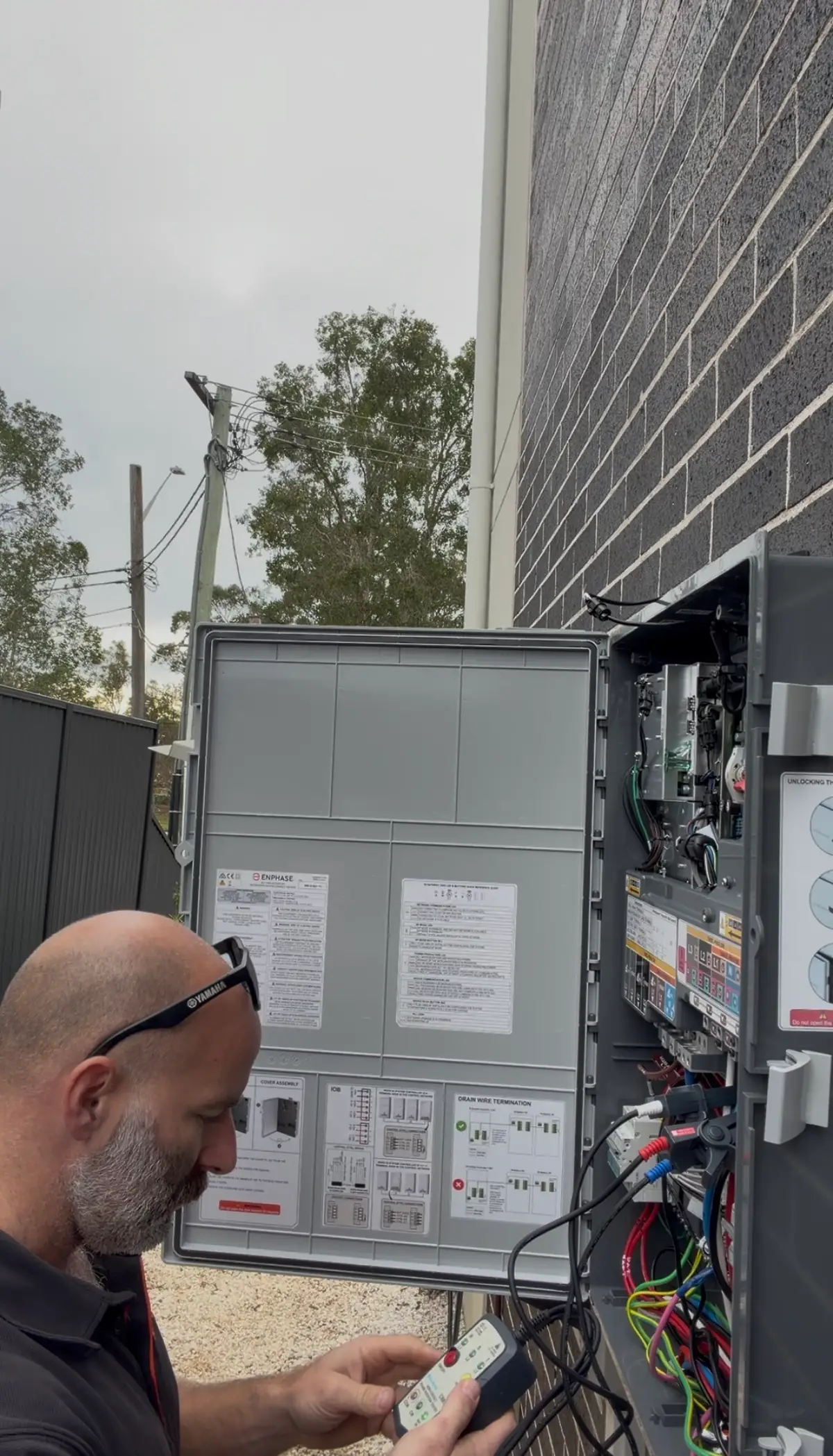
A licensed electrician attends the property, tests the switchboard and safety switches, samples circuits, and writes a report you can give to a buyer, agent, or insurer. Urgent items are flagged separately from work that can wait. If repairs are needed, we quote that work as a separate fixed price. We do not pad the report to sell a rewire.
We cover Greater Sydney and the Illawarra only: Inner West, Eastern Suburbs, North Shore, Northern Beaches, Hills District, St George, Western Sydney including Penrith, and Wollongong. We do not inspect properties in Melbourne or interstate. If your address is outside that area, we will say so before you book.
Most single-dwelling inspections take one to three hours. The written report is usually the same day or within 24 hours. Residential checks commonly start in the mid hundreds of dollars; we confirm the price from the suburb, property size, and whether the brief is pre-purchase, rental, or sale. Contractors Lic 493243C.
[ SYMPTOM CHECKLIST ]
When Sydney clients book this inspection
Pre-purchase: you want the switchboard and wiring checked before settlement on a Sydney home
Sale: a buyer or insurer has asked for a written electrical report
Rental: a landlord or managing agent needs a documented check before a new tenancy
A tenant in a Sydney property has reported heat at the board, missing safety switches, or repeated tripping
A body corporate wants a licensed look at common-area boards in a unit block
The home still has ceramic fuses or no RCD protection and you want a scoped quote, not a guess
Tell us the suburb and whether this is a sale, rental, or pre-purchase brief. We confirm price and a time before we attend.
[ EDUCATION ]
What we look for during an inspection
Switchboard condition
The switchboard is the most important part of any electrical inspection. We check the age and type of protection devices, whether safety switches (RCDs) are installed on power and lighting circuits, whether the earthing is correct, and whether there are any signs of overheating, modification by an unlicensed person, or outdated ceramic fuse technology that should be replaced.
Wiring age and condition
Pre-1980s wiring in Sydney homes is often rubber-insulated wiring (TRS or VIR cable). This insulation deteriorates over time and can crack, exposing conductors inside walls and roof spaces. NSW Government guidance flags this as a significant fire and electrocution risk. We identify the wiring type and condition during inspection and advise on risk level.
Earthing and bonding
We verify that the main earthing conductor is correctly sized and connected, and that metallic services such as water pipes, gas pipes, and structural steel are bonded to the electrical earth. Inadequate bonding creates shock hazards from voltage differences between metallic surfaces in the building.
Safety switch coverage
We check whether safety switches (RCDs) are installed on all circuits as required. From 2000 onwards, NSW regulations required RCDs on power circuits in new homes. From 2023, the National Construction Code requires RCDs on all circuits including lighting in new construction. Many older properties have partial or no RCD coverage, which is a reportable finding.
“The absolute best in the business. Reliable, honest, and truly professional!
We cannot recommend Sam enough. He has been our go-to electrician for over six projects now, and he is, without a doubt, the best tradesperson we have ever hired.
What sets Sam apart is his consistency. In every single interaction, he has been incredibly reliable, honest, and fair with his pricing. He is a true professional who is always accommodating, regardless of the complexity of the job. Beyond his exceptional technical skills, he is just a genuinely nice person who is a pleasure to have around.
We have already been recommending Sam to all our friends, family, and colleagues, and we will continue to do so. If you need electrical work done right, look no further, he is simply outstanding. Thank you, Sam, for everything you have done for us! We look forward to working with you again soon.”
“Sam is an absolute legend. He fixed my hot water system this afternoon. He didn’t charge me a lot and he done a great job”
“Sam is professional, courteous and honest. He is upfront with the costs and does everything per the book. He was a pleasure to work with and gave us exactly what we wanted. Highly recommended. Wish every tradie was like Sam”
“The absolute best in the business. Reliable, honest, and truly professional!
We cannot recommend Sam enough. He has been our go-to electrician for over six projects now, and he is, without a doubt, the best tradesperson we have ever hired.
What sets Sam apart is his consistency. In every single interaction, he has been incredibly reliable, honest, and fair with his pricing. He is a true professional who is always accommodating, regardless of the complexity of the job. Beyond his exceptional technical skills, he is just a genuinely nice person who is a pleasure to have around.
We have already been recommending Sam to all our friends, family, and colleagues, and we will continue to do so. If you need electrical work done right, look no further, he is simply outstanding. Thank you, Sam, for everything you have done for us! We look forward to working with you again soon.”
[ INFORMATION QUERY ]
Frequently asked questions
01Does an electrical inspection give me a compliance certificate?+
No. An electrical safety inspection assesses the condition of an existing installation and produces a written report. A Certificate of Compliance for Electrical Work (CCEW) is issued only when new or rectified electrical work is carried out and certified. If the inspection identifies work that needs doing and we carry it out, we then issue a CCEW for that rectification work.
02Is an electrical inspection required when buying a house in NSW?+
It is not legally required, but it is strongly advisable. Standard building and pest inspections do not include detailed electrical testing. An electrical inspection before purchase gives you a clear picture of the wiring condition, identifies any defects, and lets you negotiate or plan for rectification costs. We recommend it for any property more than 20 years old or where the wiring history is unknown.
03How often should a rental property be electrically inspected in NSW?+
NSW residential tenancy legislation requires landlords to maintain premises in a reasonable state of repair. There is no fixed legislated inspection interval, but many insurers and property managers recommend every five years for residential properties and annually for higher-turnover properties. We can advise based on the property type and age.
04Will you be able to tell me if the property needs rewiring?+
We will give you our honest assessment based on what we can see. Older rubber-insulated wiring (pre-1980s) is a known risk category. If we identify deteriorated wiring, we will explain the risk level, the options available, and what the scope of a rewire would involve. We do not make unnecessary recommendations.
05Can I be present during the inspection?+
Yes, and we encourage it for pre-purchase and pre-lease inspections. Being present means you can ask questions as we work through the property and understand the findings in real time. We walk you through the report at the end of the inspection.
06What is the difference between an electrical inspection and a building inspection?+
A standard building inspection covers the structural condition of the property and general defects visible to the building inspector. It does not include circuit testing, switchboard assessment, wiring condition testing, or safety device verification. An electrical inspection carried out by a licensed electrician covers the aspects of the installation that a building inspector cannot assess.
07Do you inspect properties outside Sydney?+
No. We only book electrical safety inspections in Greater Sydney and the Illawarra. That includes the North Shore, Northern Beaches, Hills District, Eastern Suburbs, St George, Western Sydney, and Wollongong. We do not travel to Melbourne or other states. If your suburb is outside our area we will tell you before you book.
08How do I book an electrical safety inspection in Sydney?+
Call us or use the form on this page with the property suburb, access details, and whether the brief is pre-purchase, sale, or rental. We confirm a fixed price and a time before we attend. The written report is usually the same day or within 24 hours.
[ RELATED SERVICES ]
Related Services
Compliance & Rectification
Fix any issues found during your inspection with our compliance rectification service.